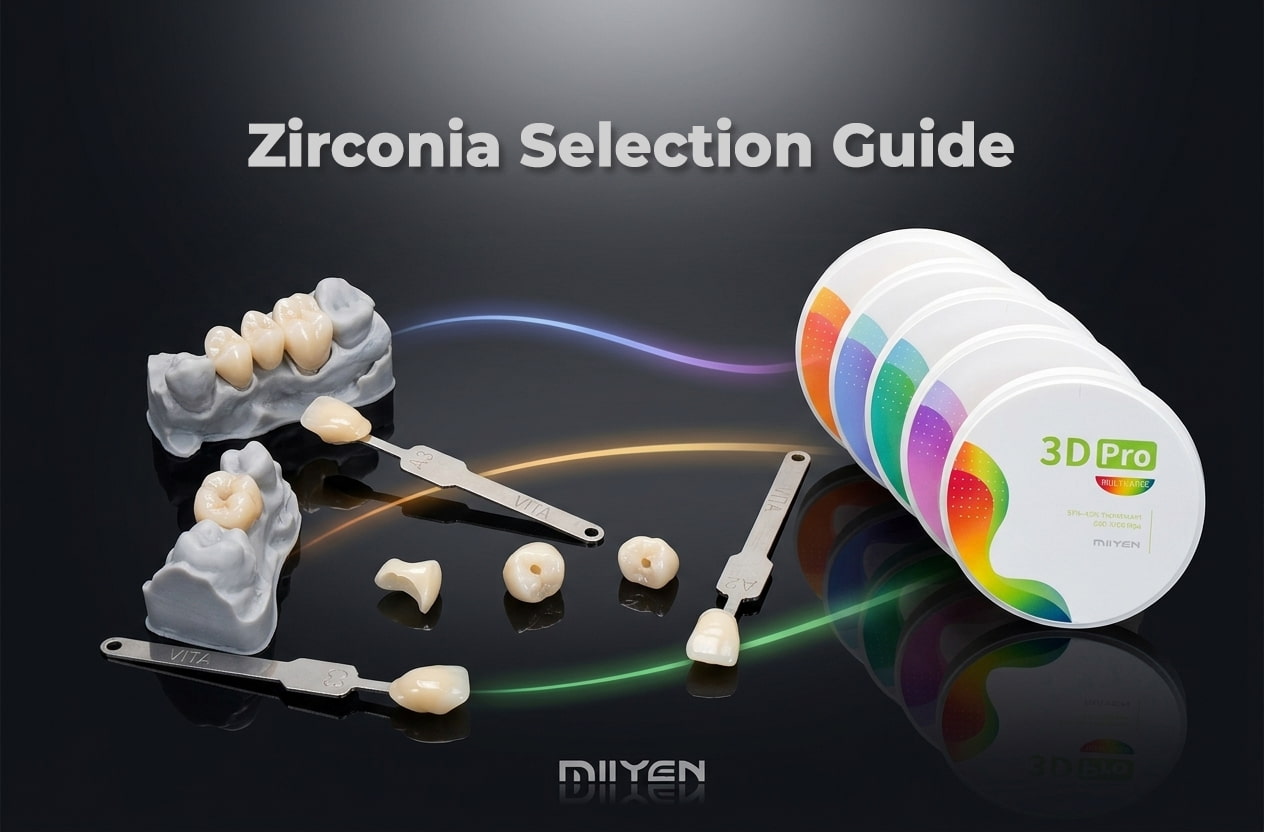
اختيار كتلة الزركونيا المناسبة هو أحد أهم القرارات في طب الأسنان الرقمي. سواء كنت تصنع تاجًا أماميًا واحدًا أو جسرًا خلفيًا طويل الامتداد، فإن المادة التي تختارها تؤثر بشكل مباشر على قوة الترميم وجماليته وعمره الافتراضي وكفاءة التصنيع.
ومع ذلك، مع توفر العديد من خيارات الزركونيا — 3Y و4Y و5Y ومتعددة الطبقات وعالية الشفافية وعالية القوة — قد يكون من الصعب تحديد المادة المناسبة فعليًا لكل حالة سريرية.
يوضح هذا الدليل الاختلافات بين مواد الزركونيا المتاحة اليوم، ويحدد العوامل الرئيسية التي ينبغي أن تؤثر في اختيارك، ويقدم توصيات عملية تستند إلى متطلبات الترميم بدلًا من الادعاءات التسويقية.
كتبه:
الفريق التقني لمواد الأسنان BAOT
راجعه:
أخصائي تطبيقات مواد الأسنان
آخر تحديث:
أغسطس 2026
يعتمد هذا المقال على علم مواد الزركونيا، وسير عمل ترميمات CAD/CAM، والتطبيقات العملية في مختبرات الأسنان. ويهدف إلى تقديم إرشادات قائمة على الأدلة لاختيار كتل الزركونيا وفقًا لمتطلبات سريرية مختلفة.
يعتمد اختيار كتلة الزركونيا المناسبة على أربعة عوامل رئيسية:
بشكل عام:
أفضل كتلة زركونيا ليست بالضرورة أقوى مادة أو أكثرها شفافية. إنها المادة التي تتوافق بأفضل شكل مع الحالة السريرية المحددة.
أصبحت الزركونيا واحدة من أكثر المواد استخدامًا في طب الأسنان الرقمي الحديث بسبب خصائصها الميكانيكية الممتازة، وتوافقها الحيوي، وقدرتها على التكيف مع سير عمل CAD/CAM.
على مدار العقد الماضي، تطورت تقنية الزركونيا بشكل كبير. كانت مواد الزركونيا المبكرة تُختار بشكل أساسي لقوتها العالية وكانت تُستخدم عادةً كإطارات. واليوم، توفر كتل الزركونيا المتقدمة شفافية محسّنة، وهياكل متعددة الطبقات، وأداءً بصريًا أكثر طبيعية، مما يسمح للمختبرات بتصنيع ترميمات أحادية الكتلة ذات مظهر جمالي عالٍ.
ومع ذلك، أدى التنوع المتزايد في مواد الزركونيا أيضًا إلى ظهور تحديات جديدة.
تحتاج مختبرات الأسنان والأطباء الآن إلى تقييم عوامل متعددة، بما في ذلك:
من الأخطاء الشائعة اختيار الزركونيا بناءً على مواصفة واحدة فقط، مثل أقصى قوة أو أعلى شفافية.
على سبيل المثال:
لذلك، فإن السؤال الصحيح ليس:
"ما هي أفضل كتلة زركونيا؟"
السؤال الأفضل هو:
"ما هي كتلة الزركونيا الأكثر ملاءمة لهذا الترميم المحدد؟"
إن فهم هذه العلاقة هو الأساس لتحقيق نتائج متوقعة لترميمات الزركونيا.
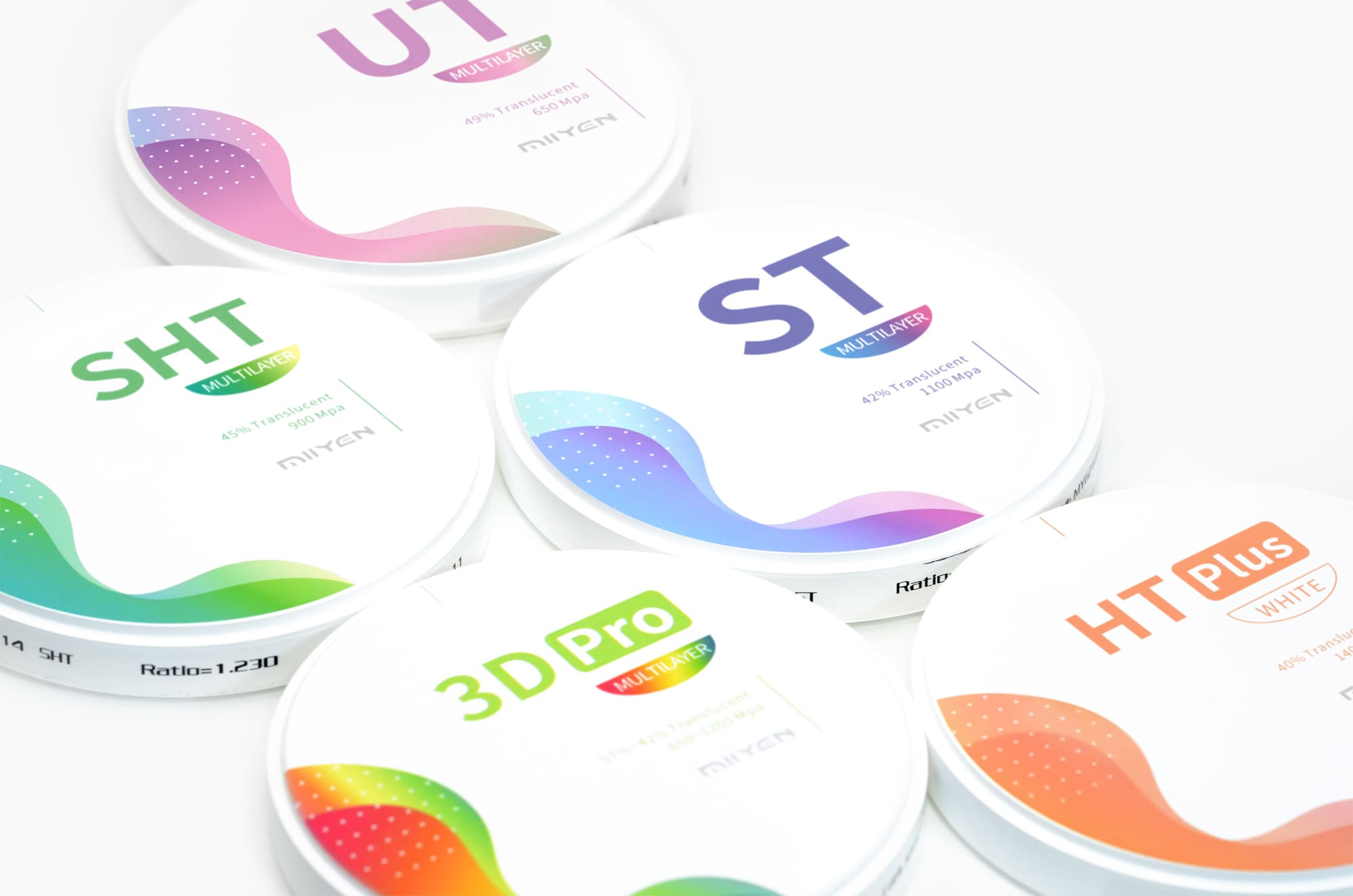
الأنواع المختلفة من كتل الزركونيا السنية
يساعد فهم الاختلافات بين أنواع الزركونيا أخصائيي طب الأسنان على اختيار المواد بكفاءة أكبر.
لا توجد كتلة زركونيا واحدة مثالية لكل حالة سريرية.
يعتمد الاختيار الأفضل على تحقيق التوازن بين:
توفر المقارنة التالية نظرة عامة على الفئات المختلفة من الزركونيا.
| الميزة | زركونيا 3Y | زركونيا 4Y | زركونيا 5Y | زركونيا متعددة الطبقات |
| محتوى الإيتريا | حوالي 3 مول% | حوالي 4 مول% | حوالي 5 مول% | يختلف حسب التركيبة |
| القوة | الأعلى | متوسطة إلى عالية | أقل من 3Y/4Y | يعتمد على التصميم |
| الشفافية | أقل | متوسطة إلى عالية | الأعلى | شفافية متدرجة |
| الأداء الجمالي | متوسط | جيد | ممتاز | انتقال طبيعي للون |
| الميزة الرئيسية | أقصى موثوقية ميكانيكية | توازن بين القوة والجماليات | مظهر بصري فائق | كفاءة سير العمل + مظهر طبيعي |
| التطبيقات النموذجية | ترميمات الأسنان الخلفية، الجسور، الزرعات | التيجان، الجسور، التطبيقات العامة | ترميمات الأسنان الأمامية ذات الجماليات العالية | التيجان، الجسور، ترميمات الزرعات |
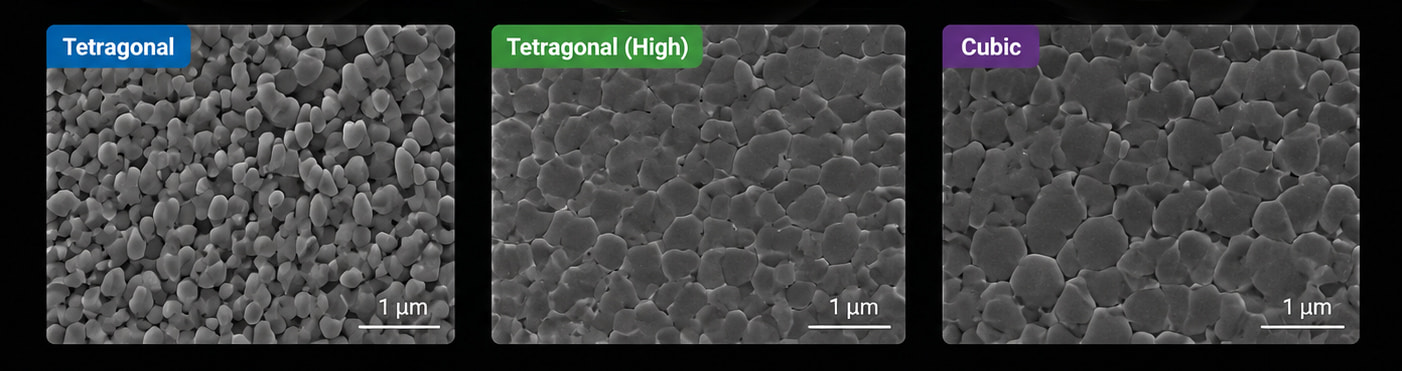
مقارنة البنية البلورية لزركونيا الأسنان
تظل زركونيا 3Y خيارًا ممتازًا عندما يكون الأداء الميكانيكي هو الاعتبار الأساسي.
موصى به لـ:
ميزتها الرئيسية هي مقاومة الكسر القوية والأداء الميكانيكي الموثوق.
يوفر زركونيا 4Y حلاً وسطًا بين المزايا الميكانيكية لزركونيا 3Y والمزايا البصرية لزركونيا 5Y.
موصى به لـ:
بالنسبة للعديد من تطبيقات طب الأسنان الروتينية، يوفر زركونيا 4Y توازنًا عمليًا.
صُممت زركونيا 5Y للتطبيقات التي يكون فيها الأداء البصري هو الأولوية الرئيسية.
موصى به لـ:
ومع ذلك، نظرًا للموازنة بين الشفافية والقوة، يبقى اختيار القشرة المناسبة أمرًا مهمًا.
أصبحت زركونيا متعددة الطبقات شائعة بشكل متزايد في مختبرات طب الأسنان الحديثة لأنها تعالج أحد التحديات الرئيسية لترميمات الزركونيا أحادية الكتلة:
كيفية تحقيق جمالية طبيعية مع الحفاظ على إنتاج رقمي فعال.
تُظهر كتل الزركونيا التقليدية عادةً خصائص بصرية موحدة نسبيًا.
تُدخل زركونيا متعددة الطبقات تغيّرات تدريجية في:
من منطقة عنق السن إلى منطقة الحافة القاطعة.
تُظهر الأسنان الطبيعية انتقالات مستمرة في اللون والشفافية.
تساعد زركونيا متعددة الطبقات على إعادة إنتاج:
ضمن قرص واحد.
بالمقارنة مع سير عمل الزركونيا التقليدي، يمكن لزركونيا متعددة الطبقات تقليل:
يمكن أن يحسن ذلك إنتاجية المختبر.
اعتمادًا على التركيبة المحددة، يمكن استخدام زركونيا متعددة الطبقات في:
يجب أن يتبع الاختيار النهائي دائمًا إرشادات الشركة المصنعة والمتطلبات السريرية.
قد تواجه مختبرات الأسنان ذات الخبرة تحديات عند اختيار مواد الزركونيا.
يمكن أن تؤثر الأخطاء التالية على نتائج الترميم.
سوء فهم شائع هو:
القوة الأعلى تعني دائمًا زركونيا أفضل.
ومع ذلك، فإن القوة وحدها لا تحدد نجاح الترميم.
يتطلب الترميم أيضًا:
قد لا توفر المادة الأقوى دائمًا أفضل نتيجة جمالية.
توفر الزركونيا عالية الشفافية أداءً بصريًا ممتازًا.
ومع ذلك، قد لا تكون المواد عالية الجمالية مناسبة دائمًا لـ:
يجب أن يأخذ اختيار المادة في الاعتبار التوقعات الجمالية والمتطلبات الميكانيكية معًا.
حتى كتلة زركونيا عالية الجودة قد لا تحقق الأداء المتوقع إذا تمت معالجتها بشكل غير صحيح.
تشمل العوامل المهمة:
يُعد اتباع بروتوكولات التلبيد الموصى بها أمرًا ضروريًا لتحقيق نتائج متوقعة.
قبل اختيار الزركونيا، يجب على المختبرات التأكد من:
يجب أن تندمج المادة المناسبة بسلاسة في عملية الإنتاج الحالية.
اتساق المادة أمر بالغ الأهمية لترميمات الأسنان.
يجب أن يوفر مورد موثوق للزركونيا:
لا تعتمد جودة الترميمات طويلة الأمد على المادة نفسها فقط، بل تعتمد أيضًا على اتساق التصنيع.
لا ينبغي أن يعتمد اختيار كتلة الزركونيا على معيار واحد فقط.
على الرغم من أن القوة والشفافية من المؤشرات المهمة، فإن مادة الزركونيا الأنسب تعتمد على العلاقة بين:
قد لا تكون كتلة الزركونيا التي تؤدي بشكل جيد في حالة سريرية واحدة الخيار المثالي لحالة أخرى.
توفر العوامل الخمسة التالية إطارًا عمليًا لاختيار مواد الزركونيا.
السؤال الأول عند اختيار الزركونيا هو:
ما نوع الترميم الذي تقوم بتصنيعه؟
تتعرض الترميمات المختلفة لمستويات مختلفة من الإجهاد الميكانيكي، ولذلك تتطلب خصائص مادية مختلفة.
توفر التيجان المفردة عمومًا مرونة أكبر في اختيار الزركونيا.
يعتمد الاختيار بشكل أساسي على موقع الترميم والمتطلبات الوظيفية للمريض.
بالنسبة للتيجان الأمامية، تكون الجماليات عادةً هي الاعتبار الأساسي.
تشمل العوامل المهمة:
يمكن أن توفر الزركونيا عالية الشفافية أو الزركونيا متعددة الطبقات نتائج جمالية محسنة عندما تسمح الحالة السريرية بذلك.
تتعرض التيجان الخلفية لقوى إطباقية أكبر.
تشمل العوامل المهمة:
بالنسبة للترميمات الخلفية، غالبًا ما يُفضل استخدام الزركونيا ذات الاعتمادية الميكانيكية الأعلى.
مقارنةً بالتيجان المفردة، تقدم الجسور السنية تحديات ميكانيكية إضافية لأن الإجهاد يتركز حول الموصل.
عند اختيار الزركونيا للجسور، ضع في الاعتبار:
تتيح الجسور قصيرة الامتداد تحقيق توازن بين الجماليات والقوة.
يمكن أن توفر الزركونيا متعددة الطبقات أو الزركونيا متوسطة الشفافية حلاً فعالاً عند اتباع معايير التصميم المناسبة.
تتطلب الجسور طويلة الامتداد موثوقية ميكانيكية أكبر.
ينبغي إعطاء الأولوية لـ:
في هذه الحالات، تكون السلامة الميكانيكية عمومًا أكثر أهمية من أقصى قدر من الشفافية.
تتطلب الترميمات المدعومة بالزرعات اختيارًا دقيقًا للمادة لأن الزرعات تنقل قوى الإطباق بشكل مختلف عن الأسنان الطبيعية.
على عكس الأسنان الطبيعية، تفتقر الزرعات إلى توسيد الرباط حول السني، مما يعني أن القوى الوظيفية تنتقل بشكل مباشر أكثر إلى الترميم.
تشمل الاعتبارات المهمة:
تجمع الزركونيا بين القوة والشفافية، مما يجعلها خيارًا شائعًا لمواد الزرعات.
يُعد ترميم القوس الكامل أحد أكثر تطبيقات الزركونيا تطلبًا.
تشمل المتطلبات المهمة:
بالنسبة للترميمات الكبيرة، تصبح اتساق المادة والتحكم في التصنيع مهمين بشكل خاص.
يؤثر موقع الترميم بشكل كبير على اختيار المادة.
تُعد المنطقة الأمامية أكثر المناطق تطلبًا من الناحية الجمالية.
غالبًا ما يتوقع المرضى ترميمات تشبه الأسنان الطبيعية بشكل كبير.
تشمل المتطلبات الرئيسية:
بالنسبة للترميمات الأمامية، يُفضل عمومًا استخدام المواد ذات الشفافية المحسّنة.
تتعرض الأسنان الخلفية لقوى مضغ أعلى بكثير.
يتحول التركيز نحو:
قد توفر مادة الزركونيا ذات الشفافية الأقل قليلًا ولكن مع أداء ميكانيكي محسّن حلًا أكثر أمانًا على المدى الطويل.
يؤثر طول الجسر بشكل مباشر على المتطلبات الميكانيكية.
مع زيادة عدد الوحدات:
لذلك، يجب أن يأخذ اختيار الزركونيا في الاعتبار ليس فقط المادة نفسها ولكن أيضًا تصميم الترميم.
ترميم قصير:
مرونة أكبر في تحقيق التوازن بين الجماليات والقوة.
ترميم طويل:
أولوية أكبر على الموثوقية الميكانيكية.
تُعد مقاومة الانثناء واحدة من أكثر خصائص الزركونيا التي تتم مناقشتها شيوعًا.
ومع ذلك، لا ينبغي اعتبارها بشكل مستقل.
يعتمد الترميم الناجح على عوامل متعددة:
نهج عملي:
اختر الزركونيا المصممة من أجل:
اختر الزركونيا المصممة من أجل:
اختر الزركونيا المصممة من أجل:
تحدد الخصائص الميكانيكية المتانة، بينما تحدد الخصائص البصرية النتائج المرئية.
تشمل العوامل الجمالية المهمة:
تؤثر الشفافية في كيفية انتقال الضوء عبر الترميم.
يمكن أن تؤدي الشفافية الأعلى إلى:
ومع ذلك، يجب دائمًا تحقيق توازن بين الشفافية والمتطلبات الميكانيكية.
الأسنان الطبيعية ليست موحدة اللون.
تُظهر المنطقة العنقية ومنطقة الجسم والحافة القاطعة خصائص بصرية مختلفة.
تعيد الزركونيا متعددة الطبقات إنتاج هذا الانتقال الطبيعي من خلال تدرجات ألوان مدمجة.
يُظهر المينا الطبيعي فلورية تحت ظروف إضاءة معينة.
يمكن لخصائص الفلورية المناسبة أن تساهم في مظهر ترميم أكثر حيوية وطبيعية.
حتى مع مواد الزركونيا المتقدمة، تظل إجراءات الإنهاء مهمة.
التلوين والتزجيجيمكن أن يعززا أيضًا:
استخدم عملية القرار المبسطة التالية:
ما الذي تقوم بصنعه؟
↓
ما الذي يهم أكثر؟
↓
→ ضع في الاعتبار الزركونيا عالية القوة
→ ضع في الاعتبار زركونيا 4Y أو الزركونيا المتقدمة متعددة الطبقات
→ ضع في الاعتبار الزركونيا عالية الشفافية
قبل الاختيار النهائي، تحقق من:
✓ توافق CAD/CAM
✓ معايير الطحن
✓ بروتوكول التلبيد
✓ ثبات اللون
✓ الدعم الفني
| المتطلب السريري | نوع الزركونيا الموصى به | الأولوية الرئيسية |
| ترميم خلفي عالي القوة | زركونيا 3Y / عالية القوة | الموثوقية الميكانيكية |
| تاج أمامي جمالي | زركونيا 5Y / متعددة الطبقات | الشفافية |
| ترميم تاج يومي | زركونيا 4Y | التوازن |
| جسر قصير الامتداد | زركونيا 4Y / متعددة الطبقات | القوة + الجماليات |
| جسر طويل الامتداد | زركونيا عالية القوة | مقاومة الكسر |
| ترميم الزرعة | زركونيا متوازنة | القوة + المظهر |
يحتاج المريض إلى تاج أمامي حيث يكون المظهر الطبيعي هو الاهتمام الأساسي.
تتطلب الترميمة:
يمكن أن توفر الزركونيا عالية الشفافية أو الزركونيا متعددة الطبقات أداءً جماليًا محسنًا عندما تسمح الظروف الميكانيكية بذلك.
يمكن أن تحقق الترميمة:
يتطلب جسر خلفي متعدد الوحدات أداءً ميكانيكيًا موثوقًا على المدى الطويل.
تتطلب الترميمة:
ينبغي إعطاء الأولوية لمادة زركونيا ذات خصائص قوة أعلى.
يمكن أن توفر الترميمة:
يتطلب الترميم المدعوم بزرعة المتانة والجماليات المقبولة معًا.
تتطلب الترميمة تحقيق توازن بين:
يمكن أن يوفر حل الزركونيا المتوازن دعماً ميكانيكياً مناسباً مع الحفاظ على نتائج جمالية مقبولة.
يمكن أن يحقق الترميم:
لا يقتصر اختيار كتلة الزركونيا المناسبة على اختيار نوع المادة الصحيح فقط.
تلعب موثوقية المورد أيضاً دوراً حاسماً في تحقيق جودة إصلاح متسقة.
يجب أن توفر الشركة المصنعة المحترفة للزركونيا أكثر من مجرد كتالوج للمنتجات. ينبغي لمختبرات الأسنان تقييم القدرة التقنية، واتساق التصنيع، ودعم التطبيقات قبل إقامة شراكة طويلة الأمد.
يعتمد أداء الزركونيا بشكل كبير على التحكم في التصنيع.
يجب أن يكون لدى المورد الموثوق تحكم صارم في:
بالنسبة للزركونيا متعددة الطبقات، يعد اتساق التصنيع مهماً بشكل خاص لأن الاختلافات في تركيب المادة قد تؤثر على:
ينبغي لموردي الزركونيا المحترفين تقديم معلومات تقنية واضحة، بما في ذلك:
تساعد المعلومات التقنية الشفافة مختبرات الأسنان على اتخاذ قرارات أفضل بشأن المواد.
يجب أن يدعم المورد الموثوق العملاء طوال سير العمل، بما في ذلك:
يعتمد أداء الزركونيا ليس فقط على المادة نفسها، بل أيضًا على مدى فعالية دمجها في سير عمل المختبر.
يمكن لمُصنّع مواد الأسنان ذو الخبرة توفير مزايا تتجاوز مجرد توريد المنتجات.
تشمل هذه المزايا:
بالنسبة لمختبرات الأسنان التي تسعى إلى تعاون طويل الأمد، ينبغي اعتبار قدرة المورد بنفس أهمية مواصفات المنتج.
شركة BAOT للتكنولوجيا الحيوية المحدودةتركز على البحث والتطوير وتصنيع مواد الأسنان من أجل طب الأسنان الرقمي الحديث.
تشمل مجموعة منتجات الشركة:
من خلال التطوير المستمر للمواد وتحسين عمليات التصنيع، تهدف BAOT إلى تزويد مختبرات الأسنان بحلول موثوقة تجمع بين:
كمثال على تطبيقالزركونيا متعددة الطبقات،زركونيا MIIYEN 3D Pro متعددة الطبقاتمصممة للمختبرات التي تبحث عن التوازن بينالقوة، ونفاذية الضوء، وكفاءة سير العمل.
| المعلمة | زركونيا MIIYEN 3D Pro متعددة الطبقات |
| نوع المادة | زركونيا متعددة الطبقات |
| مقاومة الانثناء | 800–1200 ميغاباسكال |
| نفاذية الضوء | 42%–57% |
| معامل التمدد الحراري (200-500°C) | (10.0-11.0) -6·ك-1 |
| درجة حرارة التلبيد. | 1500°C |
| هيكل التدرج اللوني | تدرج طبيعي متعدد الطبقات |
| الاستخدامات | تيجان، جسور، وترميمات زراعة الأسنان |
| سير العمل | متوافق مع CAD/CAM |
تستخدم المناطق المختلفة مواد ذات درجات قوة متفاوتة: تستخدم منطقة العاج 3Y-TZP، وتجمع منطقة الانتقال بين 3Y-TZP و4Y-TZP و5Y-TZP، بينما تستخدم منطقة الحافة القاطعة 5Y-TZP. تركز كل منطقة على جوانب مختلفة من القوة والشفافية، مما يسمح بزركونيا MIIYEN 3D Pro متعددة الطبقات بالتكيف بمرونة مع مجموعة متنوعة من الاحتياجات السريرية، من ترميمات التاج المفرد إلى الجسور الطويلة.
يعكس هذا النوع من تصميم المواد اتجاهًا أوسع في الصناعة: الانتقال من الزركونيا ذات الخاصية الواحدة إلى حلول زركونيا موجهة نحو التطبيقات.
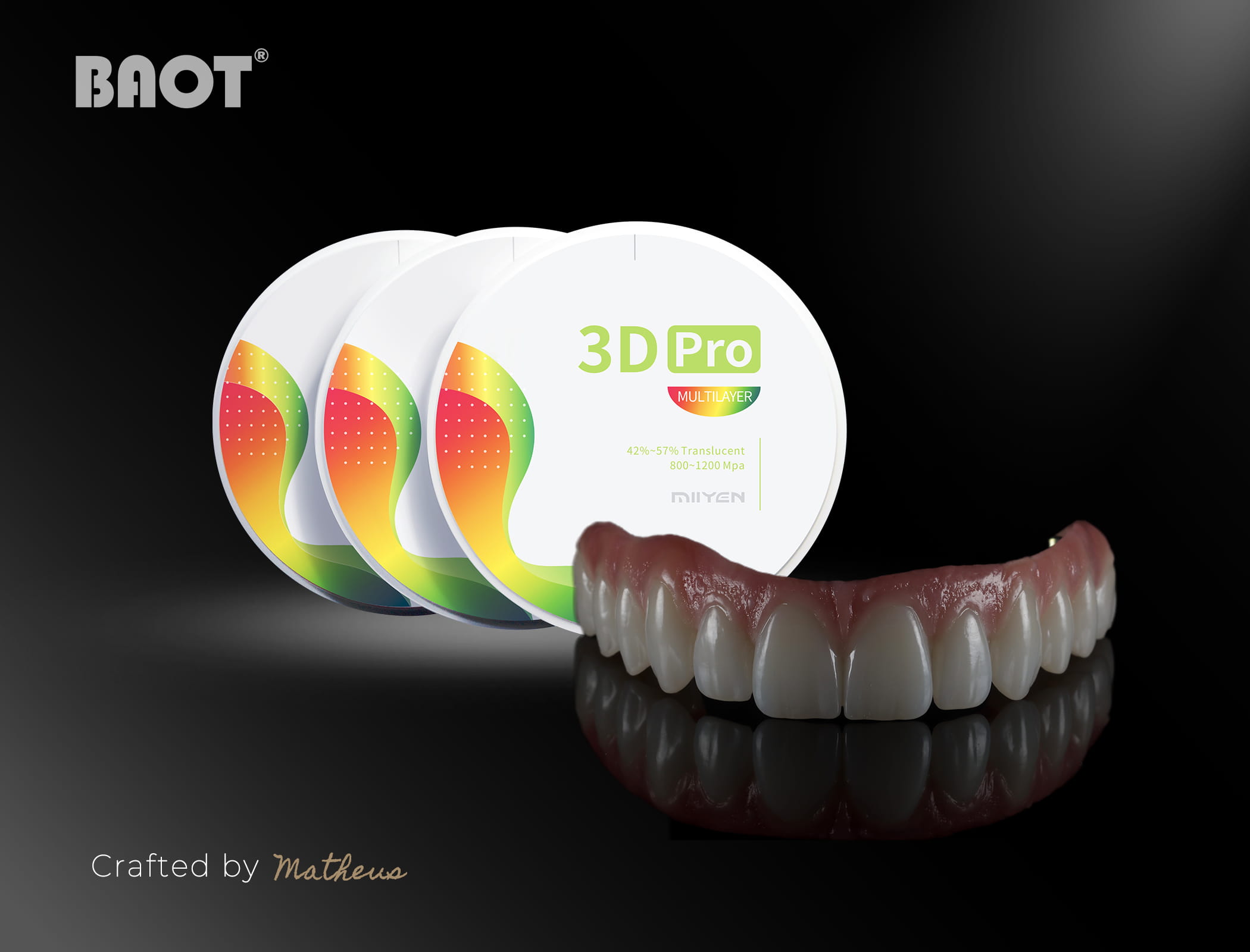
حالة جسر طويل مصنوعة باستخدام كتلة زركونيا MIIYEN 3D Pro متعددة الطبقات
قبل اختيار كتلة زركونيا، ضع في الاعتبار الأسئلة التالية:
☐ ما نوع الترميم المطلوب؟
☐ أين يقع الترميم؟
☐ ما هي الأولوية الرئيسية؟
☐ هل توفر الزركونيا قوة انثناء كافية؟
☐ هل الشفافية مناسبة للاستخدام السريري؟
☐ هل توفر المادة أداءً ثابتًا للون؟
☐ هل معايير التلبيد محددة بوضوح؟
☐ هل تتوافق الزركونيا مع نظام CAD/CAM الخاص بك؟
☐ هل إجراءات الطحن والتلبيد موثقة بوضوح؟
☐ هل يوفر المورد دعمًا فنيًا؟
لقد وفر تطور تقنية الزركونيا للمتخصصين في طب الأسنان خيارات أكثر من أي وقت مضى.
ومع ذلك، فإن أفضل كتلة زركونيا ليست ببساطة المادة الأقوى أو الخيار الأكثر شفافية.
تعتمد نتائج الترميم الناجحة على اختيار مادة تتوافق مع:
بشكل عام:
من خلال فهم خصائص الزركونيا وتطبيق عملية اختيار منظمة، يمكن لمختبرات الأسنان تحقيق نتائج ترميمية أكثر قابلية للتنبؤ وكفاءة وجمالية.
تعتمد أفضل كتلة زركونيا على موقع التاج والمتطلبات الوظيفية والتوقعات الجمالية.
بالنسبة للتيجان الأمامية، قد يوفر الزركونيا عالي الشفافية أو الزركونيا متعدد الطبقات نتائج جمالية محسنة.
بالنسبة للتيجان الخلفية، قد يكون الزركونيا ذو القوة الميكانيكية الأعلى أكثر ملاءمة.
يجب أن يعتمد الاختيار الصحيح دائمًا على المتطلبات السريرية بدلًا من خاصية مادية واحدة فقط.
تتطلب ترميمات الجسور مراعاة دقيقة للقوة ومقاومة الكسر.
بالنسبة للجسور طويلة الامتداد، يُفضل عمومًا استخدام الزركونيا ذات الموثوقية الميكانيكية الأعلى.
يجب أن يأخذ اختيار المادة أيضًا في الاعتبار:
يتمثل الاختلاف الرئيسي في التوازن بين القوة والشفافية.
| النوع | الميزة الرئيسية |
| زركونيا 3Y | أعلى قوة |
| زركونيا 4Y | توازن بين القوة والجماليات |
| زركونيا 5Y | أعلى شفافية |
يعتمد أداء الزركونيا متعدد الطبقات على تركيبته المحددة.
صُممت مواد الزركونيا الحديثة متعددة الطبقات للجمع بين التدرجات البصرية والخصائص الميكانيكية المناسبة.
يجب دائمًا تقييم الأداء الفعلي وفقًا للبيانات التقنية الخاصة بالشركة المصنعة.
لا.
تُحسن الشفافية الأعلى الأداء الجمالي لكنها قد تقلل من القوة الميكانيكية.
يعتمد الاختيار المثالي على مؤشر الترميم.
لا توجد مادة زركونيا واحدة مثالية لكل حالة سريرية.
تتطلب الترميمات المختلفة موازنة مختلفة بين:
تعتمد قوة الانثناء المطلوبة على نوع الترميم.
تتطلب الجسور الخلفية وترميمات الزرعات عادةً أداءً ميكانيكيًا أعلى من التيجان الأمامية البسيطة.
تُبسط زركونيا متعددة الطبقات سير العمل من خلال دمج تدرجات اللون والشفافية داخل المادة.
يمكن أن يقلل ذلك من خطوات التوصيف اليدوي مع تحسين الاتساق الجمالي.
ينبغي أن يوفر المورد المحترف:
تعتمد النتائج الأفضل على الجمع بين:

NO.12 Building, Yujing industry Zone, 106 Qihao Road, Torch Development District, Zhongshan City, GuangDong Province
البريد الإلكتروني : mike.zhang@baot.biz




© 2026 BAOT Biological Technology Co., Ltd كل الحقوق محفوظة.




 مقالات